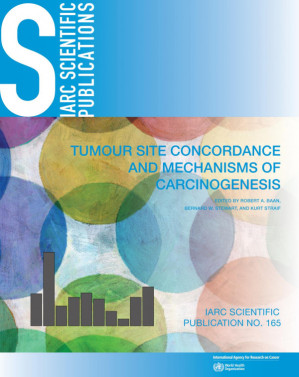
Tumour Site Concordance and Mechanisms of Carcinogenesis
Bernard W Stewart, Kurt Straif, Robert A Baan
Description
Tumour Site Concordance and Mechanisms of Carcinogenesis provides an in-depth scientific and clinical analysis of why cancers arise in specific anatomical locations and how molecular mechanisms drive site-specific tumor development.
Understanding tumour site concordance—the tendency of cancers to develop in particular organs, tissues, or paired anatomical locations—offers valuable insights into genetic susceptibility, shared environmental exposures, embryological origins, hormonal influences, and molecular signaling pathways. This book integrates epidemiology, molecular oncology, pathology, and translational research to explain the complex biological processes underlying carcinogenesis.
Key Topics Covered:
Principles of tumour site concordance and cancer epidemiology
Genetic mutations and inherited cancer syndromes
Role of oncogenes, tumor suppressor genes, and epigenetic changes
Microenvironmental influences and tissue-specific susceptibility
Hormonal and immunological contributions to carcinogenesis
Molecular pathways driving organ-specific cancers
Implications for precision medicine and targeted therapy
Preventive strategies and risk assessment models
Written for oncologists, pathologists, cancer researchers, postgraduate medical students, and clinical scientists, this book bridges foundational cancer biology with clinical oncology practice. It provides a structured and evidence-based framework for understanding how and why cancers develop in specific sites, enhancing both diagnostic reasoning and therapeutic decision-making.
Keywords: carcinogenesis mechanisms, tumor site specificity, molecular oncology book, cancer pathogenesis guide, organ-specific cancer development, oncology reference text, precision oncology.
Language
English
Publisher
International Agency for Research on Cancer
Year Published
2019
Categories
Dermatology