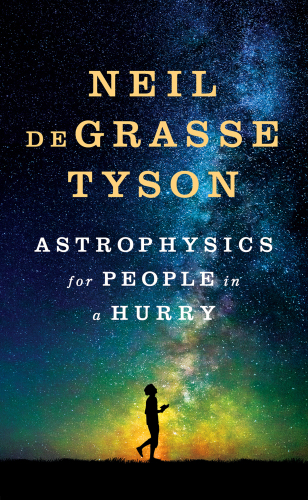
Astrophysics for People in a Hurry (Astrophysics for People in a Hurry Series)
Neil deGrasse Tyson
Description
Discover the Wonders of the Universe with Astrophysics for People in a Hurry
Have you ever wondered how the universe began, what happens inside a black hole, or what dark matter reveals about the cosmos? Astrophysics for People in a Hurry by Neil deGrasse Tyson provides an engaging introduction to these fascinating questions and many more.
Written for readers with busy lives, this popular science book makes complex astronomical and scientific ideas easier to approach without requiring an advanced background in physics. Tyson combines scientific explanations with accessible language, humor, and thought-provoking insights to introduce readers to the forces, objects, and discoveries that help us understand the universe.
From the origins of the cosmos to the mysteries of distant galaxies, the book takes readers on an intellectual journey through modern astrophysics. It explains how scientists investigate the universe and how our understanding of space, time, matter, and energy continues to evolve.
Whether you are new to astronomy or simply want to expand your scientific knowledge, this book offers an opportunity to explore some of the biggest questions in existence.
What Will You Learn from This Book?
By reading Astrophysics for People in a Hurry, you can explore several important concepts in modern astronomy and physics.
- The origins of the universe: Discover the Big Bang theory and the scientific ideas that explain how the universe has evolved.
- Galaxies and stars: Learn about the vast structures of the cosmos, the life cycles of stars, and the processes that shape celestial objects.
- Black holes: Explore these extraordinary objects and understand why they are among the most fascinating subjects in astrophysics.
- Dark matter and dark energy: Discover why scientists believe these mysterious components are important to understanding the universe.
- The laws of nature: Understand how physical laws govern matter, energy, motion, and the behavior of celestial bodies.
- Our place in the cosmos: Consider how Earth and humanity fit into the enormous scale of the observable universe.
- Scientific thinking: Develop a greater appreciation for evidence-based explanations, astronomical discoveries, and the scientific method.
- The relationship between science and everyday life: Explore how understanding the cosmos can change the way you think about our planet and the universe around us.
Why Should You Read This Book?
The universe is filled with extraordinary phenomena, yet understanding them can seem difficult when scientific explanations are filled with technical terminology. This book offers a more approachable way to explore astrophysics and discover the ideas behind some of science's most important questions.
Here are several reasons to read it:
1. Understand complex science in accessible language
The book introduces major astrophysical concepts without requiring readers to have advanced mathematical or scientific knowledge.
2. Explore the biggest questions about existence
From the beginning of the universe to the nature of dark matter, it encourages curiosity about the forces and phenomena that shape reality.
3. Expand your scientific knowledge
Reading this book can strengthen your understanding of astronomy, cosmology, physics, and the discoveries that influence our picture of the cosmos.
4. Make the most of your reading time
Its concise chapters make it appealing to readers who want to explore important scientific ideas without committing to a lengthy technical textbook.
5. Develop a broader perspective
Learning about the immense scale of the universe can encourage reflection on Earth, humanity, and our place in the natural world.
What Is This Book About?
Astrophysics for People in a Hurry is a popular science book that introduces readers to the fundamental concepts of astrophysics and modern cosmology. Written by renowned astrophysicist and science communicator Neil deGrasse Tyson, it explores how the universe began, how celestial objects behave, and what scientific discoveries tell us about the nature of reality.
Rather than presenting astrophysics as a collection of complicated equations, the book focuses on explaining key ideas in an engaging and understandable way. It covers subjects such as the Big Bang, galaxies, black holes, cosmic evolution, dark matter, and dark energy, helping readers appreciate the discoveries and unanswered questions that drive scientific exploration.
The book is particularly valuable for readers who want a broad introduction to the subject rather than a comprehensive technical textbook.
Who Should Read This Book?
This book is an excellent choice for:
- Science enthusiasts who enjoy learning about space, stars, and galaxies.
- Students seeking an accessible introduction to astrophysics and cosmology.
- Astronomy beginners who want to understand the universe without advanced scientific prerequisites.
- Busy professionals looking for concise, informative nonfiction reading.
- Curious readers interested in the Big Bang, black holes, and the mysteries of space.
- Nonfiction book lovers who enjoy discovering scientific ideas and expanding their knowledge of the natural world.
Explore the Universe, One Idea at a Time
Astrophysics for People in a Hurry offers an inviting starting point for anyone who wants to understand the universe and the science behind its most extraordinary phenomena. Through concise explanations and an engaging approach, Neil deGrasse Tyson helps readers explore the cosmos, appreciate the power of scientific discovery, and consider humanity's place in a much larger universe.
If you have ever looked at the night sky and wondered what lies beyond Earth, this book can help you begin exploring the answers. Open its pages and discover why astrophysics is one of the most fascinating ways to understand our universe.
Language
English
Publisher
W. W. Norton & Company
Year Published
2017
Categories
Physics


